一、什么是NioEventGroup
netty的启动类中涉及到很重要的一个角色,EventLoopGroup。
Netty内部都是通过线程在处理各种数据,EventLoopGroup就是用来管理调度他们的,注册Channel,管理他们的生命周期
EventLoopGroup bossGroup = new NioEventLoopGroup(1);
        EventLoopGroup workerGroup = new NioEventLoopGroup();
        final EchoServerHandler serverHandler = new EchoServerHandler();
        try {
            ServerBootstrap b = new ServerBootstrap();
            b.group(bossGroup, workerGroup)
             .channel(NioServerSocketChannel.class)
             .option(ChannelOption.SO_BACKLOG, 100)
             .handler(new LoggingHandler(LogLevel.DEBUG))
             .childHandler(new ChannelInitializer<SocketChannel>() {
                 @Override
                 public void initChannel(SocketChannel ch) throws Exception {
                     ChannelPipeline p = ch.pipeline();
                     if (sslCtx != null) {
                         p.addLast(sslCtx.newHandler(ch.alloc()));
                     }
                     //p.addLast(new LoggingHandler(LogLevel.INFO));
                     p.addLast(serverHandler);
                 }
             });
二、如何构造一个NioEventLoopGroup
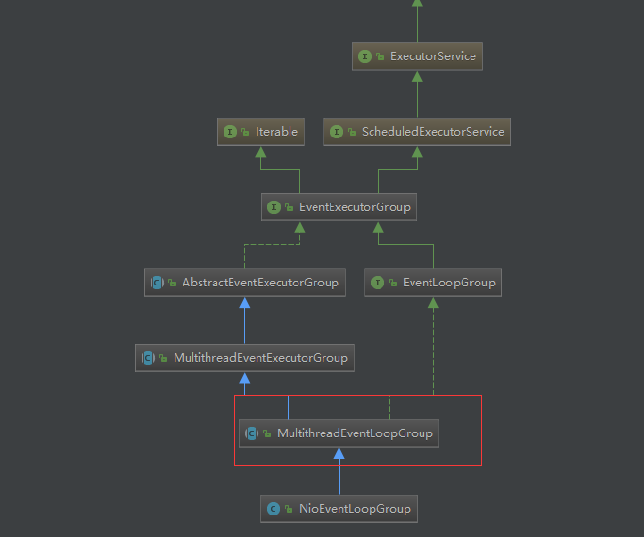
MultithreadEventLoopGroup是NioEventLoopGroup的父类,通过跟踪源代码,我们可以发现构造函数的实现是在MultithreadEventLoopGroup中完成
   /**
     * @see MultithreadEventExecutorGroup#MultithreadEventExecutorGroup(int, Executor, Object...)
     */
    protected MultithreadEventLoopGroup(int nThreads, Executor executor, Object... args) {
        super(nThreads == 0 ? DEFAULT_EVENT_LOOP_THREADS : nThreads, executor, args);
    }
DEFAULT_EVENT_LOOP_THREADS为cpu的核数*2
/**
     * Create a new instance.
     *
     * @param nThreads          the number of threads that will be used by this instance.
     * @param executor          the Executor to use, or {@code null} if the default should be used.
     * @param chooserFactory    the {@link EventExecutorChooserFactory} to use.
     * @param args              arguments which will passed to each {@link #newChild(Executor, Object...)} call
     */
    protected MultithreadEventExecutorGroup(int nThreads, Executor executor,
                                            EventExecutorChooserFactory chooserFactory, Object... args) {
        if (nThreads <= 0) {
            throw new IllegalArgumentException(String.format("nThreads: %d (expected: > 0)", nThreads));
        }

        if (executor == null) {
            executor = new ThreadPerTaskExecutor(newDefaultThreadFactory());
        }

        children = new EventExecutor[nThreads];

        for (int i = 0; i < nThreads; i ++) {
            boolean success = false;
            try {
                children[i] = newChild(executor, args);
                success = true;
            } catch (Exception e) {
                // TODO: Think about if this is a good exception type
                throw new IllegalStateException("failed to create a child event loop", e);
            }
这里初始化有几个核心步骤:
- 构造一个线程执行器ThreadPerTaskExecutor
- 为每个线程构造一个事件执行器EventExecutor,实际上是构造了NioEventLoop
三、ThreadPerTaskExecutor
public final class ThreadPerTaskExecutor implements Executor {
    private final ThreadFactory threadFactory;

    public ThreadPerTaskExecutor(ThreadFactory threadFactory) {
        if (threadFactory == null) {
            throw new NullPointerException("threadFactory");
        }
        this.threadFactory = threadFactory;
    }

    @Override
    public void execute(Runnable command) {
        threadFactory.newThread(command).start();
    }
}
ThreadPerTaskExecutor通过execute方法可以简单地实现对一个command的执行。
ThreadFactory简单实现了一个线程工厂的封装,主要是规范了线程的命名规范,优先级等。
四、EventExecutor
NioEventLoopGroup.java
@Override
    protected EventLoop newChild(Executor executor, Object... args) throws Exception {
        EventLoopTaskQueueFactory queueFactory = args.length == 4 ? (EventLoopTaskQueueFactory) args[3] : null;
        return new NioEventLoop(this, executor, (SelectorProvider) args[0],
            ((SelectStrategyFactory) args[1]).newSelectStrategy(), (RejectedExecutionHandler) args[2], queueFactory);
    }
为每个线程构造一个NioEventLoop,这里注意会把上面构造的executor和NioEventGroup传入。